
I no longer buy pie crusts at the grocery store. I finally got the hang of making pie crust from scratch and how to roll and crimp pie crusts. There’s an unusual ingredient in this pie crust that yields a tender and flaky crust. Of all the pie crust recipes I’ve made over the last few decades, this is clearly “the Perfect Pie Crust” that I will always make.
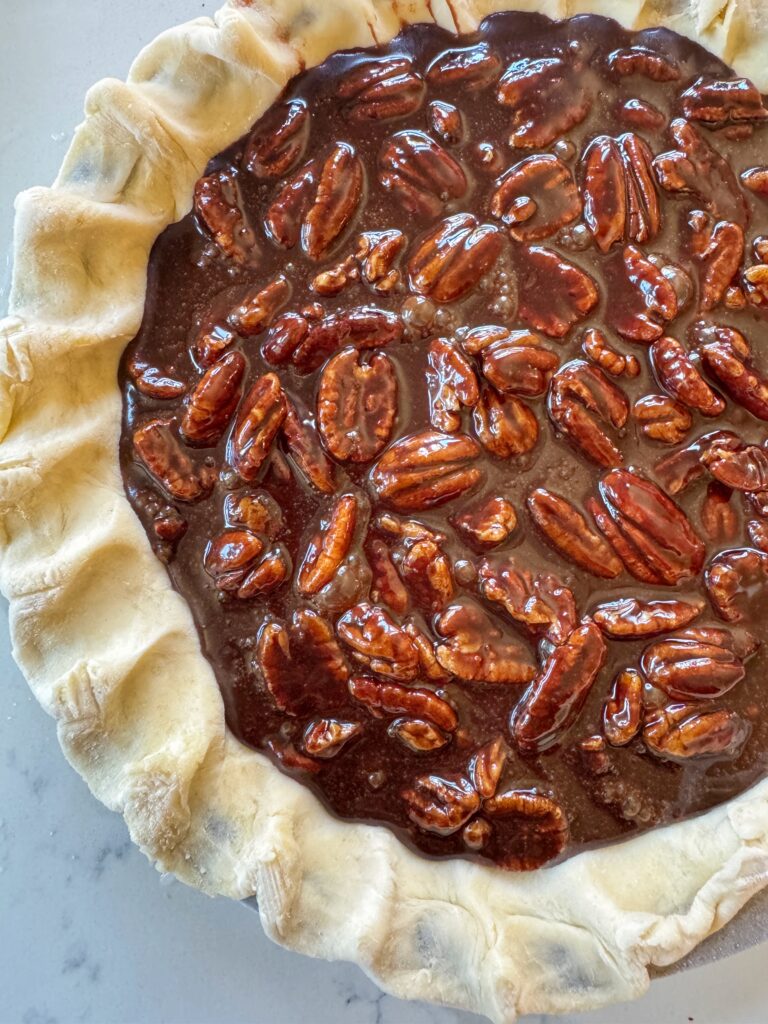
I don’t mean to cause a riot with pie crust lovers. Some swear that an all butter pie crust is the best. Others say all shortening is the way to go. I’ve tried a pie crust recipe with vinegar and even an egg yolk. They’re all fine, but my husband usually ends up with MY pie crust, after I’ve gutted the filling.
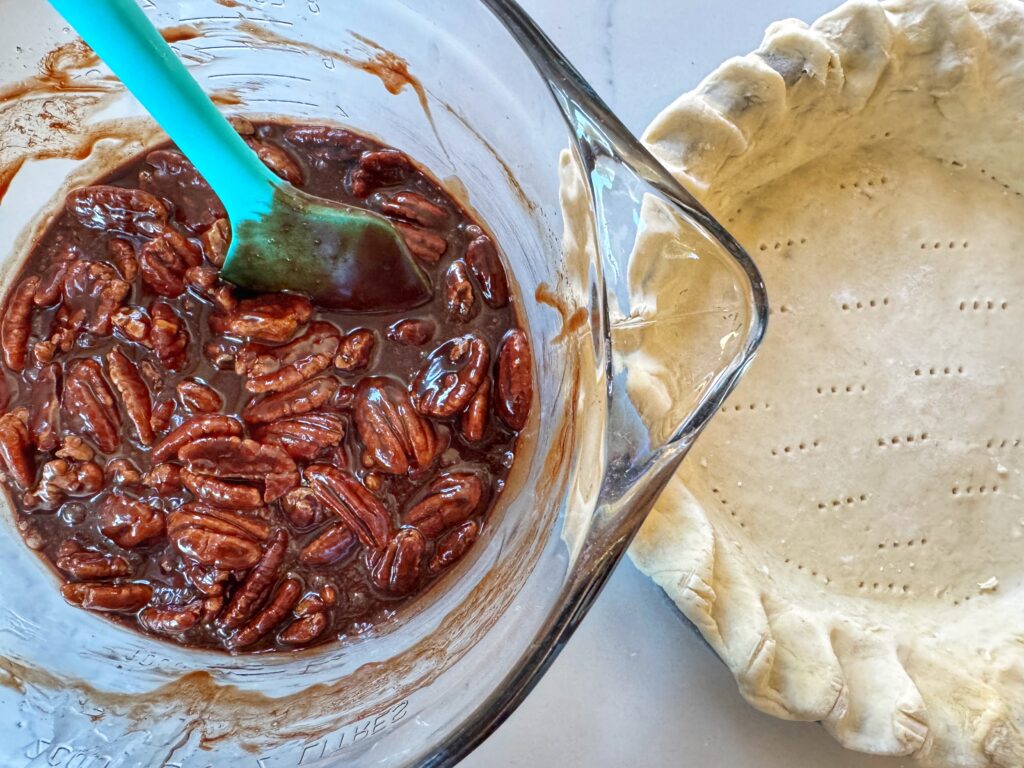
I made this recipe to make my annual Pumpkin Pie and (by request) a Chocolate Pecan Pie . For the first time, ever, I loved a pie crust! I actually ate the whole thing. What is this sorcery? Well, it’s America’s Test Kitchen’s Fool Proof Pie Crust recipe. What makes it so unique is vodka. Yes, alcohol.
This is ATK’s explanation as to why and how they developed this recipe:
We wanted to make pie dough that was tender, flavorful, and consistent. Since water bonds with flour to form gluten, too much of it makes a crust tough. But rolling out dry dough is difficult. For a pie dough recipe that rolled out easily, we use a unique mixing method that “waterproofs” much of the flour so that it can’t be hydrated and form gluten. We also use some vodka, which is just 60 percent water, and therefore produces less gluten. It contributes no alcohol flavor, since the alcohol vaporizes in the oven.
The “old school” way is to use a pastry cutter. Me? I’m all for using a food processor. My Cuisinart is going on 40 years of performing well. We start by whizzing flour and salt in the processor. Next, add very cold butter and shortening. I used Butter Flavor Crisco.
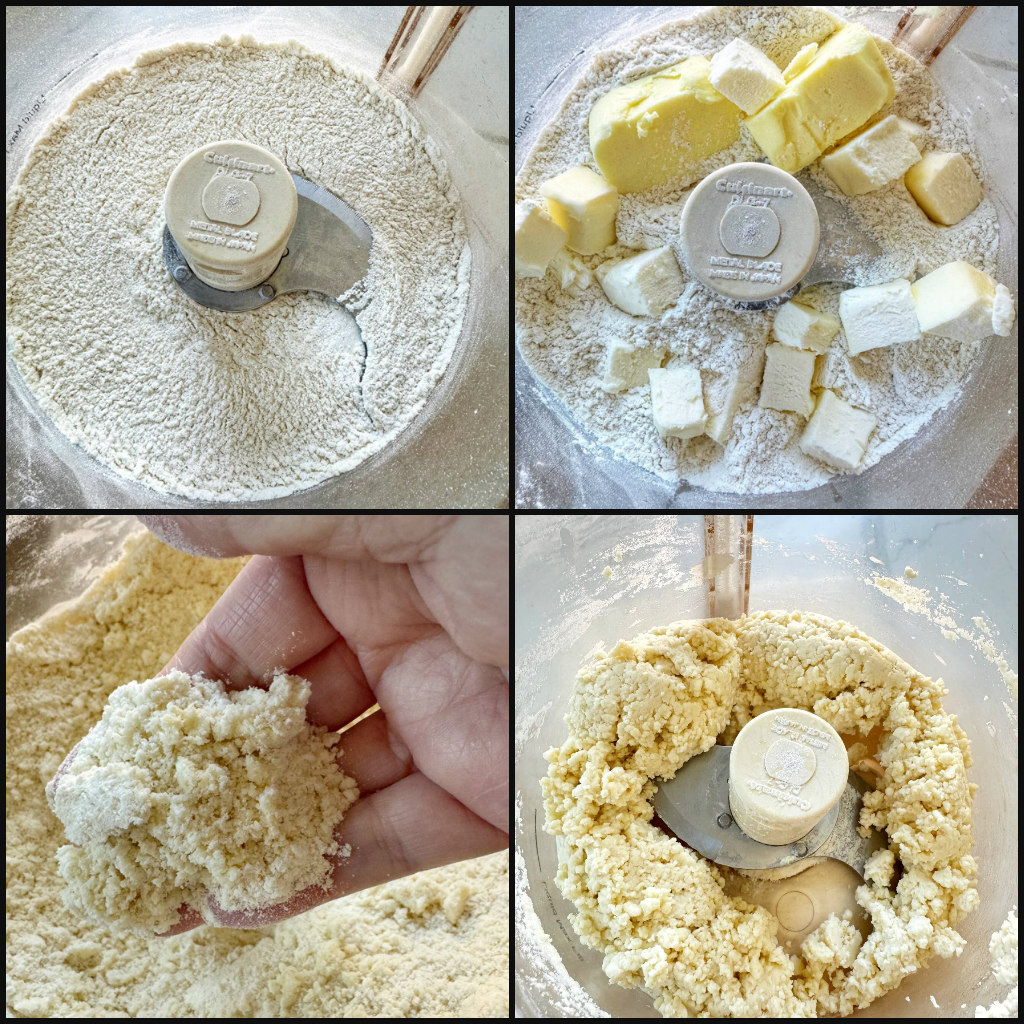
Whiz the ingredients until it resembles coarse sand. I took a detour from ATK’s instructions and so far, I’ve had no problems.
ATK: (Add a portion of the flour in the beginning, then the remaining flour and sprinkle vodka and water over mixture. With rubber spatula, use folding motion to mix, pressing down on dough until dough is slightly tacky and sticks together.
ME: Add all of the flour in the beginning, then add the vodka and water into the food processor and pulse until the dough sticks together. Oops! The pie crust worked!
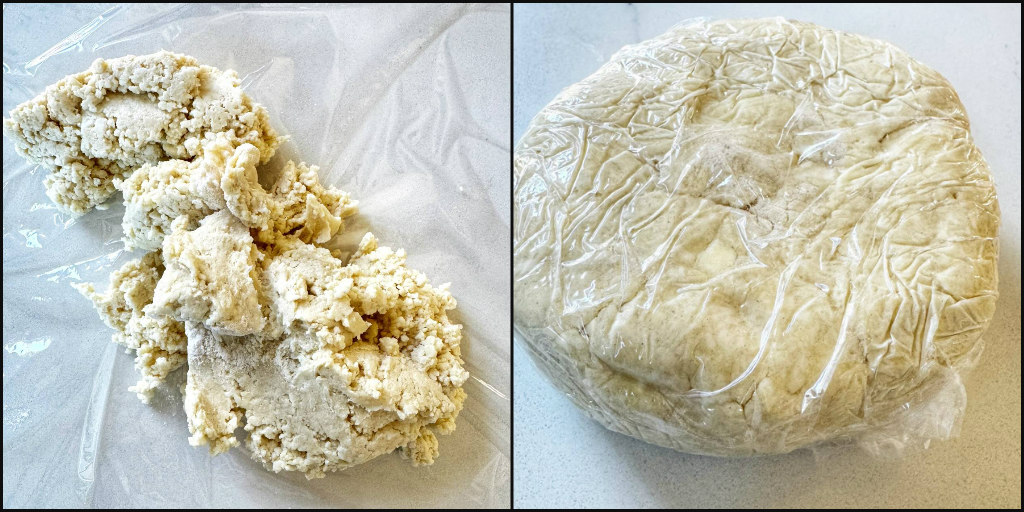
On a piece of plastic wrap, dump the dough and bring the ends together and then shape the dough into a disc. Refrigerate for at least 45 minutes or up to 2 days.
Rolling out pie dough has become my favorite part. On a clean counter dust generously with flour.
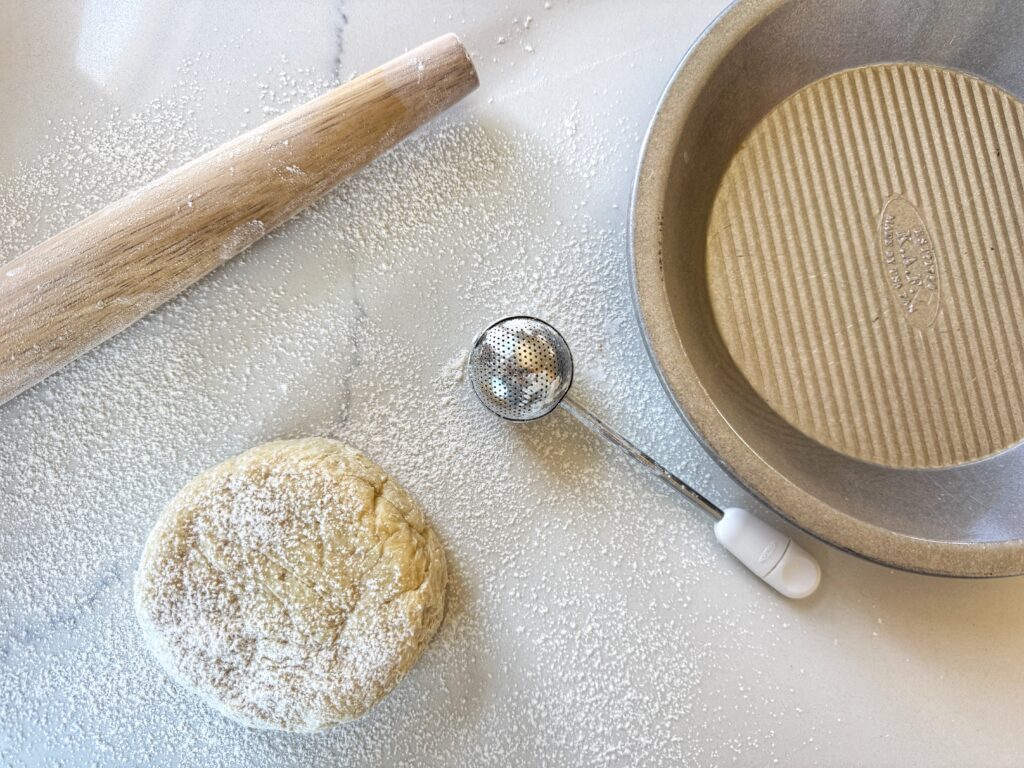
My favorite tool is a French Rolling Pin because it feels so easy to roll and turn as I please. Be sure to dust your rolling pin and dust the top of the dough disc. I like to “smack” the dough with the middle part of my rolling pin, right the across and diagonally to get it started. This dough rolled out like a dream!
Look at all those small bits of butter! As the pie crust bakes and steam is released, that’s what gives you flaky and tender pie crust.
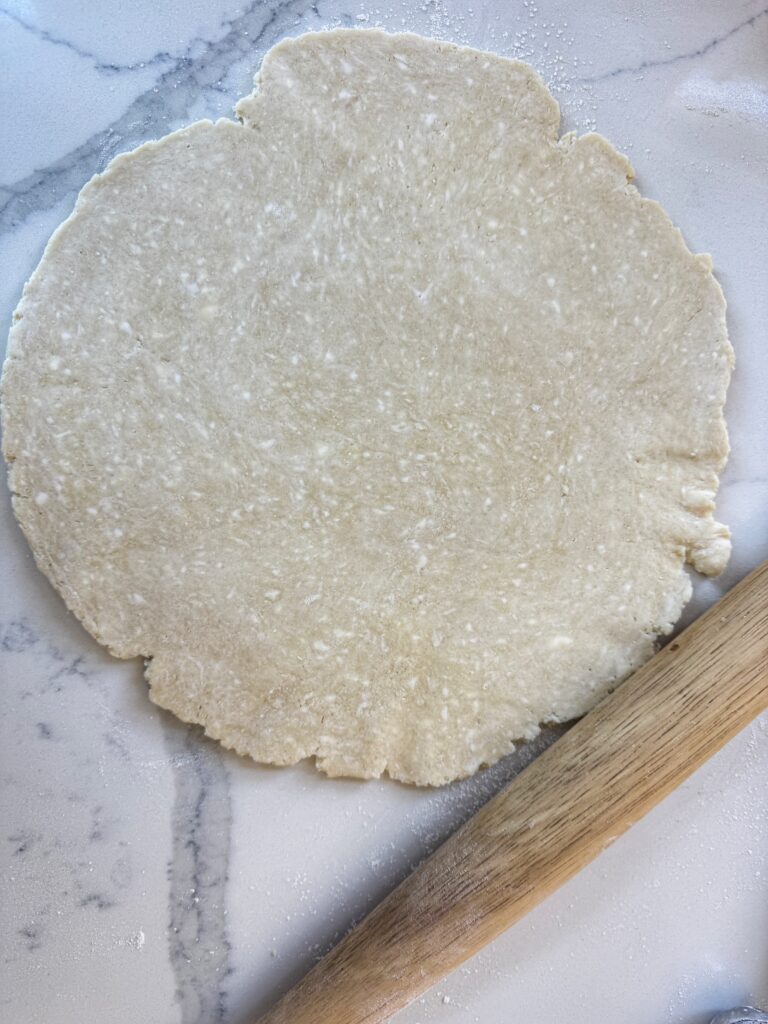
In the past, I’d roll and roll and then my dough would stick. I’d tear the pie dough and get frustrated. Now, I’ve learned (by watching ATK videos) that if I roll, lift and add a little flour and turn 1/4. Repeat, repeat– no more dough getting stuck! Practice does make perfect.
Some bakers fold the dough in half and then quarters to fill the pie plate. That method occasionally broke my dough and I’d have to piece it together.
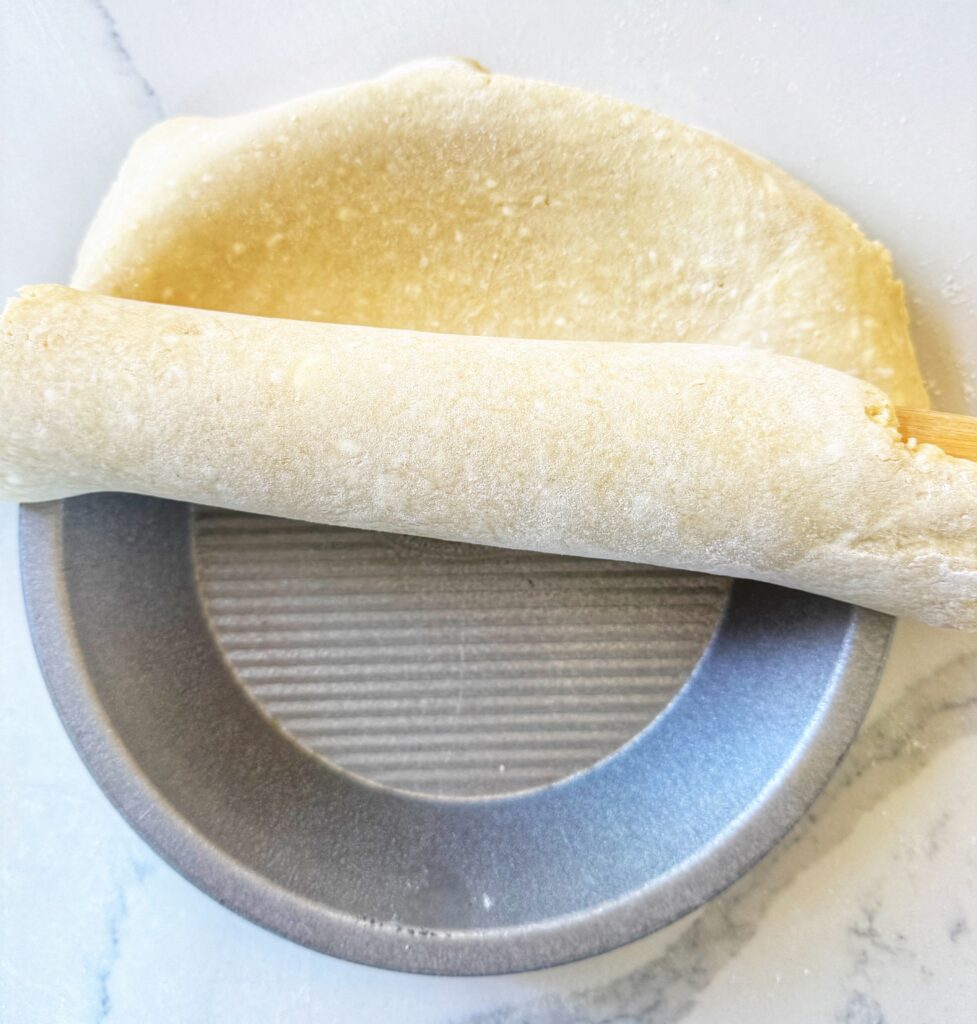
I prefer to gently roll the dough off the counter/bench, onto my rolling pin and then unroll it over the pie plate.
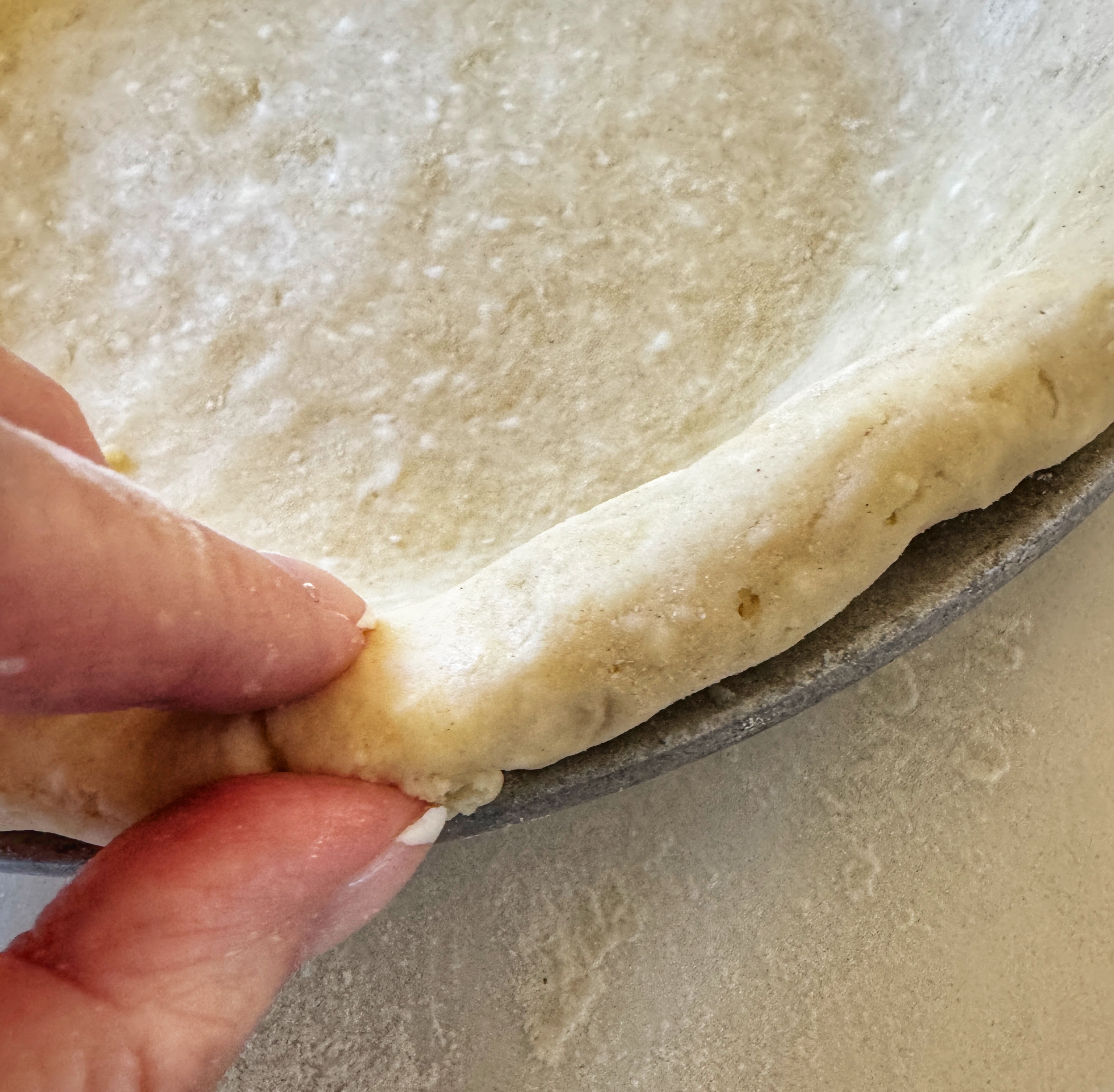
Trim any excess dough, leaving 1/2″ dough overhang. Tuck the excess under and get ready to crimp. Sometimes, I trimmed off too much dough, so I did a patch job with excess dough. Nobody will know, once the pie is filled.
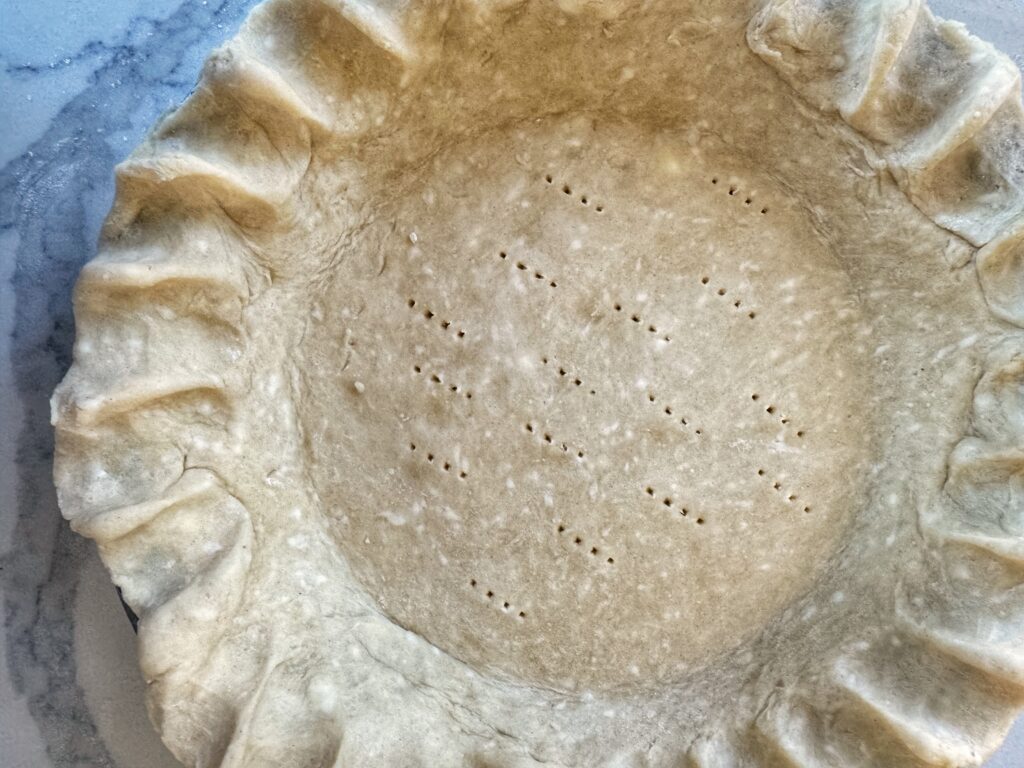
There are lots of videos on crimping/fluting pie crusts and I have a couple ones that I like. Some bakers get really fancy but I’m not that talented. Refrigerate the dough for at least 30 minutes. In this case, I stuck mine in the freezer until the following day, when I made the Pecan Pie.
FINAL NOTES: There are some brands that make commercial pie crusts that aren’t too shabby. Once you try this version, you’ll understand why homemade can’t be beat. My husband loves pie and I’m happy to make them for him– I’ll eat a slice or two!
Perfect Pie Crust
Equipment
- 1 Pie pan
Ingredients
- 1 ¼ cups unbleached all-purpose flour 6 ¼ ounces/177 grams, divided
- ½ teaspoon table salt
- 1 tablespoon sugar
- 6 tablespoons cold unsalted butter ¾ stick, cut into ¼-inch slices
- ¼ cup chilled solid vegetable shortening cut into 2 pieces
- 2 tablespoons vodka cold; see notes before making recipe
- 2 tablespoons cold water
Instructions
- Process 3/4 cups flour, salt, and sugar together in food processor until combined, about 2 one-second pulses.SEE MY "ACCIDENTAL" INSTRUCTIONS FURTHER DOWN
- Add butter and shortening and process until homogenous dough just starts to collect in uneven clumps, about 10 seconds (dough will resemble cottage cheese curds with some very small pieces of butter remaining, but there should be no uncoated flour).
- Scrape down sides and bottom of bowl with rubber spatula and redistribute dough evenly around processor blade.
- Add remaining 1/2 cup flour and pulse until mixture is evenly distributed around bowl and mass of dough has been broken up, 4 to 6 quick pulses. Empty mixture into medium bowl.
ATK Instructions:
- Sprinkle vodka and water over mixture. With rubber spatula, use folding motion to mix, pressing down on dough until dough is slightly tacky and sticks together. Flatten dough into 4-inch disk.
My "accidental" instructions that still worked:
- I added ALL of the flour into the food processor. Once I had the "crumbs" from processing, I added ALL of the liquid and then pulsed the dough until it just clumped together.
REMAINING INSTRUCTIONS:
- Wrap in plastic wrap and refrigerate at least 45 minutes or up to 2 days.
BLIND BAKE NSTRUCTIONS;
- Adjust oven rack to lowest position, place rimmed baking sheet on oven rack, and heat oven to 425 degrees.
- Remove dough from refrigerator and roll out on generously floured (up to ¼ cup) work surface to 12-inch circle about 1/8 inch thick.
- Roll dough loosely around rolling pin and unroll into pie plate, leaving at least 1-inch overhang on each side.
- Working around circumference, ease dough into plate by gently lifting edge of dough with one hand while pressing into plate bottom with other hand.
- Leave overhanging dough in place; refrigerate until dough is firm, about 30 minutes.
- Trim overhang to ½ inch beyond lip of pie plate. Fold overhang under itself; folded edge should be flush with edge of pie plate.
- Flute dough or press the tines of a fork against dough to flatten it against rim of pie plate.
- Refrigerate dough-lined plate until firm, about 15 minutes.
- Remove pie pan from refrigerator, line crust with foil, and fill with pie weights or pennies. Bake for 15 minutes.
- Remove foil and weights, rotate plate, and bake for 5 to 10 minutes additional minutes until crust is golden brown and crisp.
Notes



Leave a Reply