
German Pancakes are a childhood memory from my German Mutti who made them for us quite often. Unlike American pancakes, there are no leaveners. The ingredients are basic pantry and kitchen staples– Flour, milk and eggs. We always ate them filled with jam. These are so simple to make and have become a family favorite treat.
My son, who now lives in Oregon, called to ask me how to make Oma’s German Pancakes. I realized that the recipe wasn’t on my blog! I’ve always made German Pancakes from muscle memory, so I didn’t have measurements. I was disappointed to find that the majority of German Pancakes on the internet confused them with Dutch Baby Pancakes.
Today is the day for me to measure the ingredients and share how my Oma and my Mutti made these. Let’s do this!
Measure 2 cups of all-purpose flour into a bowl. Add two eggs and a pinch of salt.
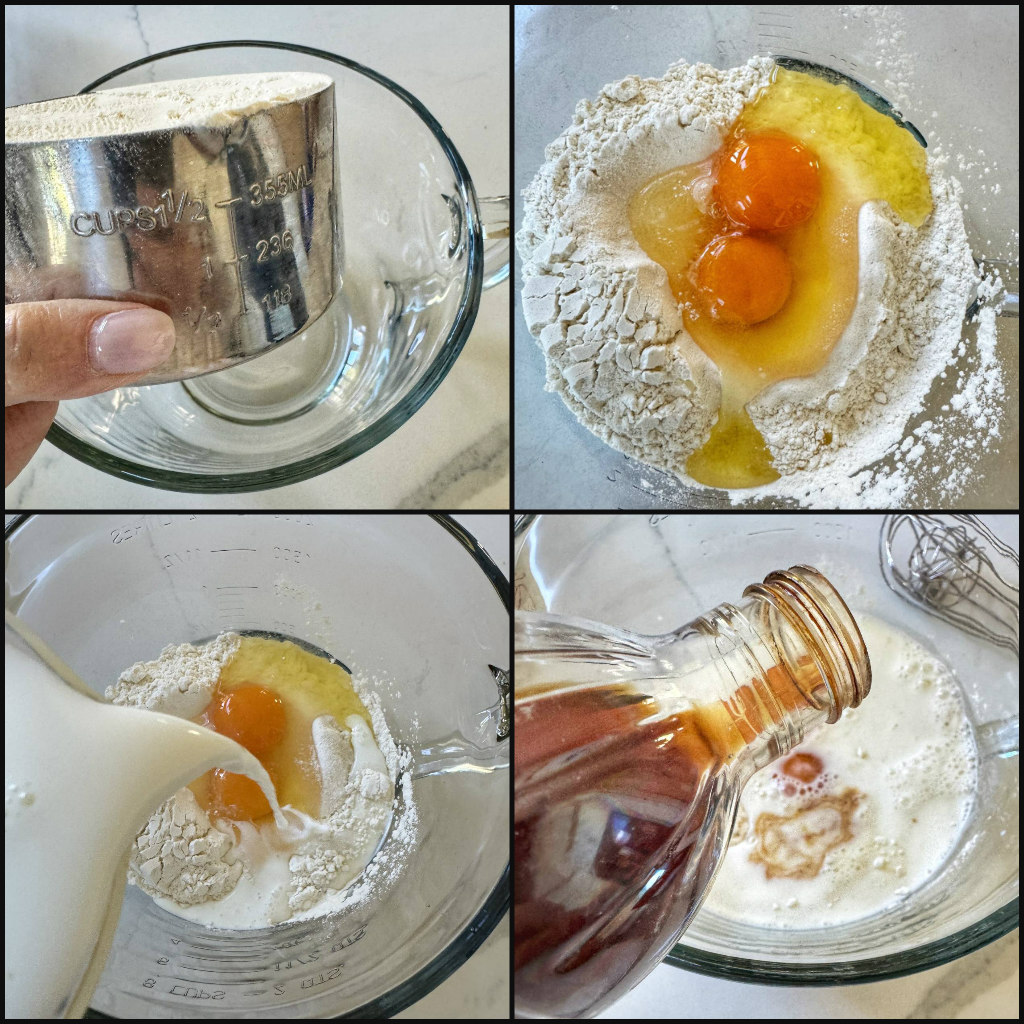
Add milk (see notes) and thoroughly whisk the ingredients. My mother would add about a tablespoon of sugar. My slight change was to replace the sugar with 2 teaspoons of pure vanilla. NOTES: I’ve seen some German Pancake Recipes that adds sparkling water. We never have added that ingredient and have been happy with the results. You can mix the batter in a blender, if you wish. Either way, allow the batter to rest for at least 15 minutes.
In the meantime, melt some butter. Heat a 10″ non-stick skillet on medium heat. Evenly brush the skillet with butter. You want the butter to sizzle.
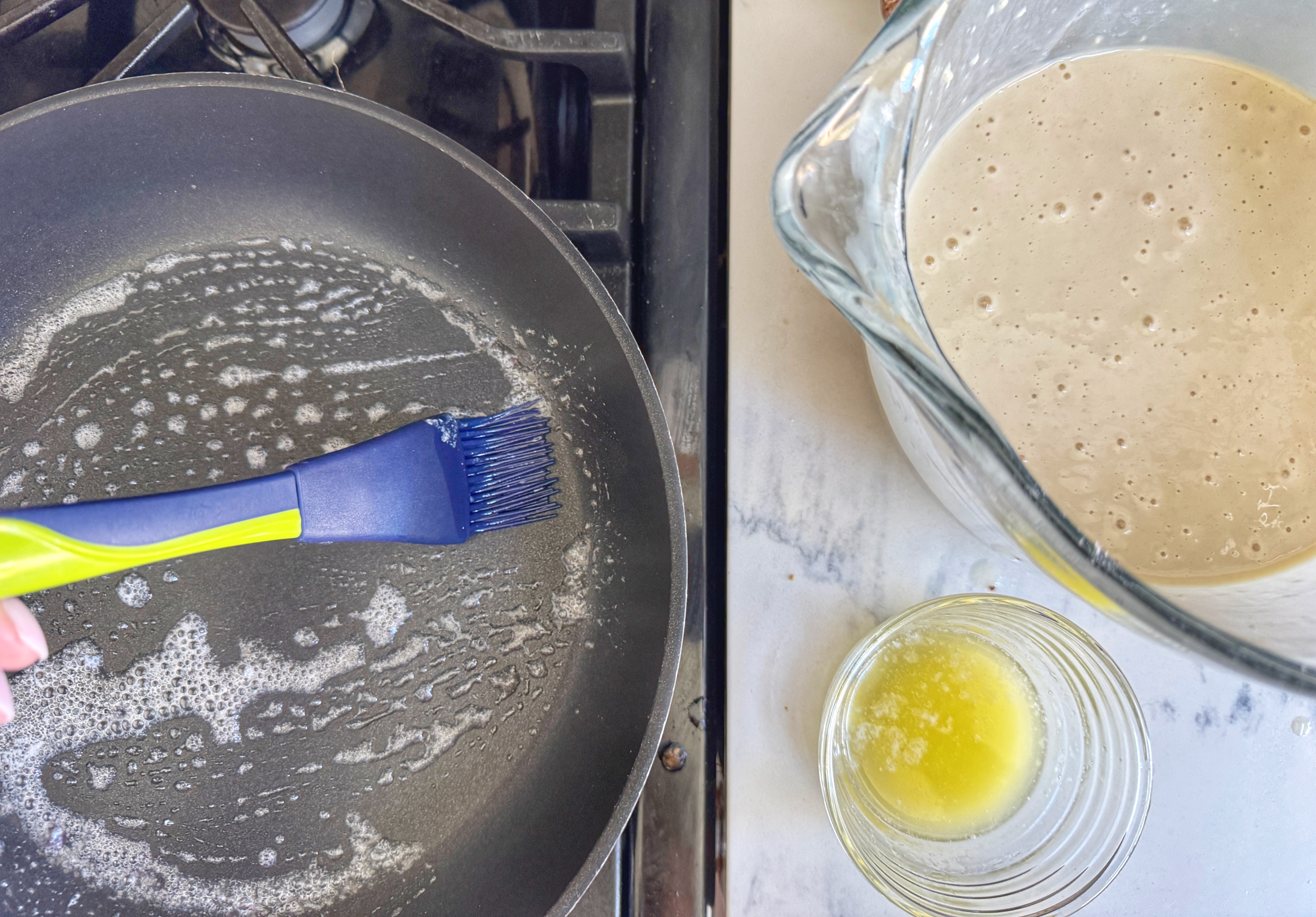
To the prepared skillet, pour about 1/2 cup of batter into the skillet and immediately lift it up and tilt the pan until the batter evenly distributes.
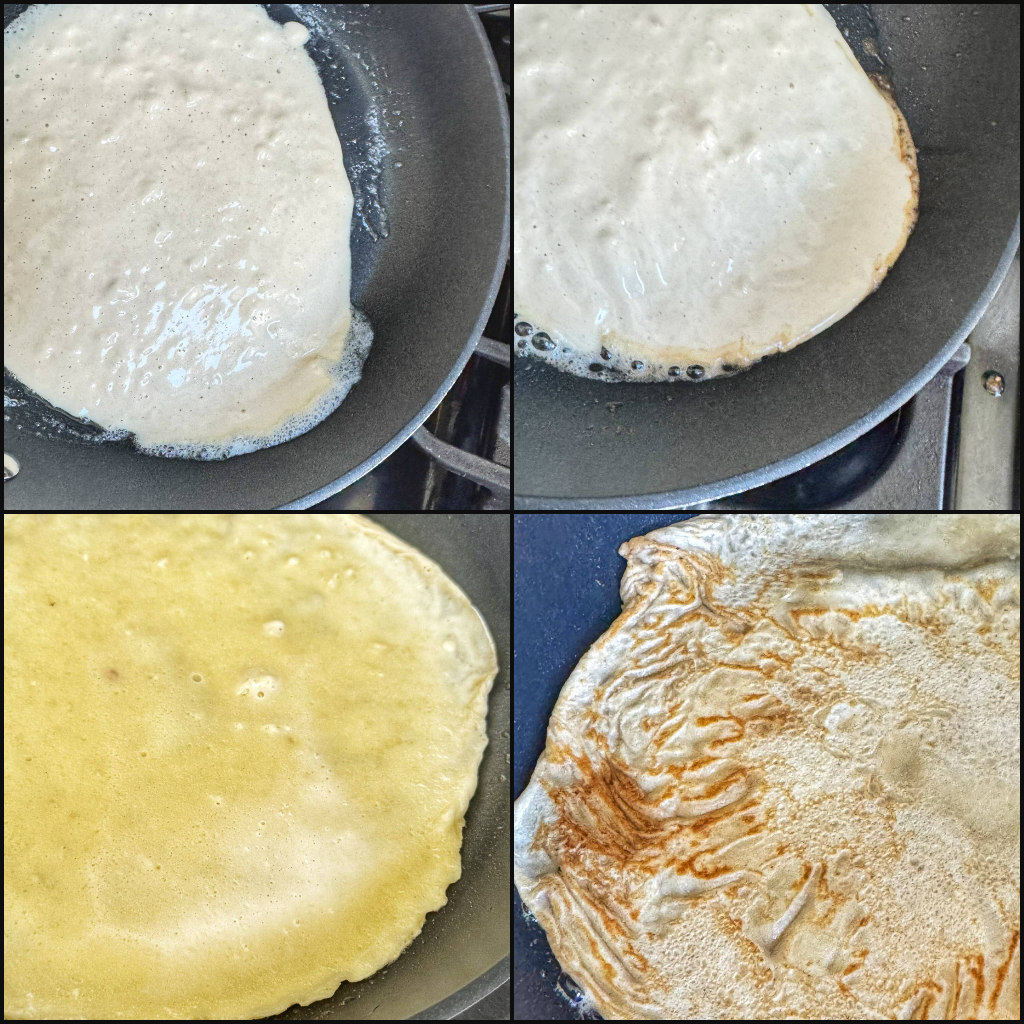
Lift a corner of the pancake to see if the bottom has cooked to a light golden brown. Flip it over and continue to cook for 2-3 minutes. Remove the pancake onto an oven warm plate. Continue cooking all of the pancake batter (leftovers keep well in the refrigerator and reheat well in a microwave).
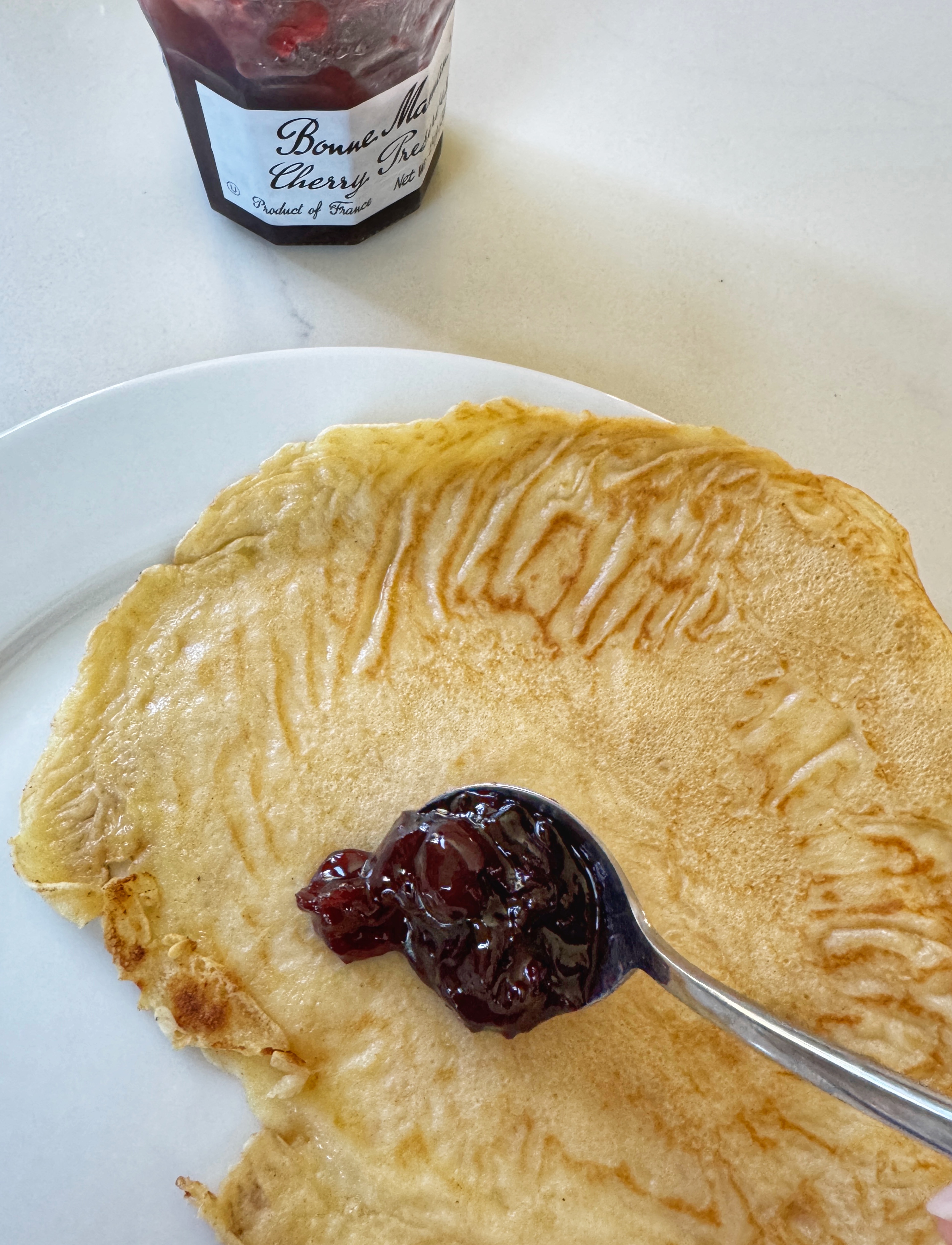
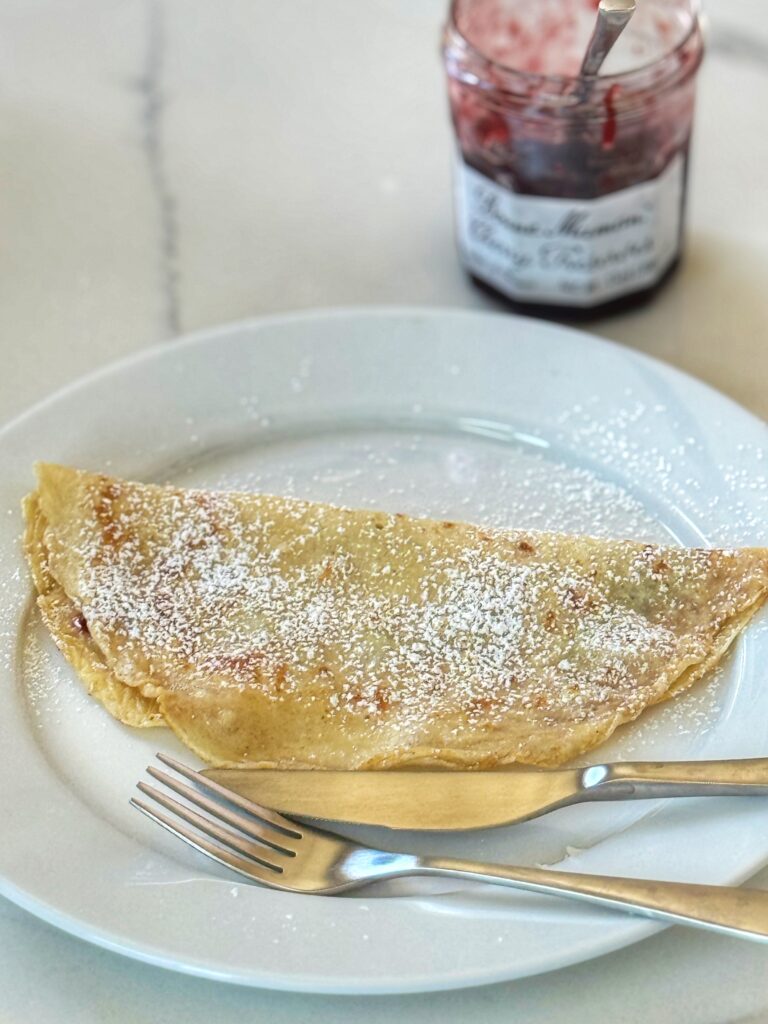
My mother always filled half of the pancake with jam or preserves. She’d fold the pancake in half, and sprinkle granulated sugar on top. I will note that “Mutti” used less milk to make the batter thicker. That’s how we ate them for most of our life. However…
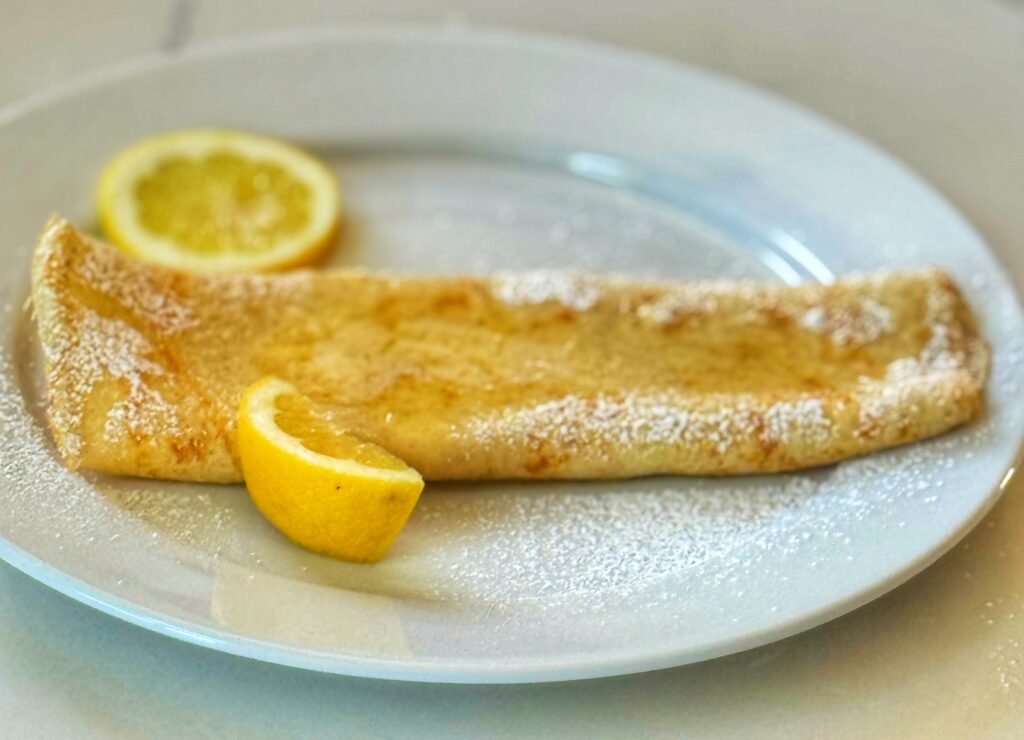
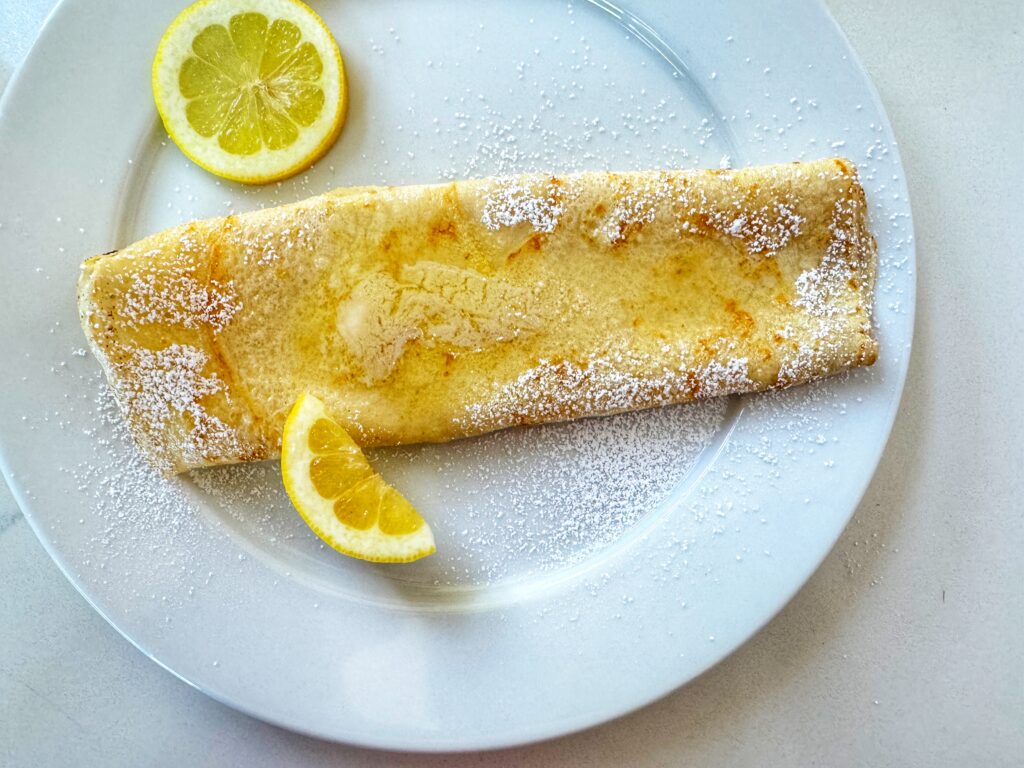
Over the years, I began to increase the amount of milk for a thinner batter– more like a thin crêpe. I’d roll each pancake in thirds (like a French omelette). On top, a thin schmear of butter and fresh squeeze lemon juice (or homemade lemon curd) became my favorite way to eat these, with a dusting of powdered sugar.
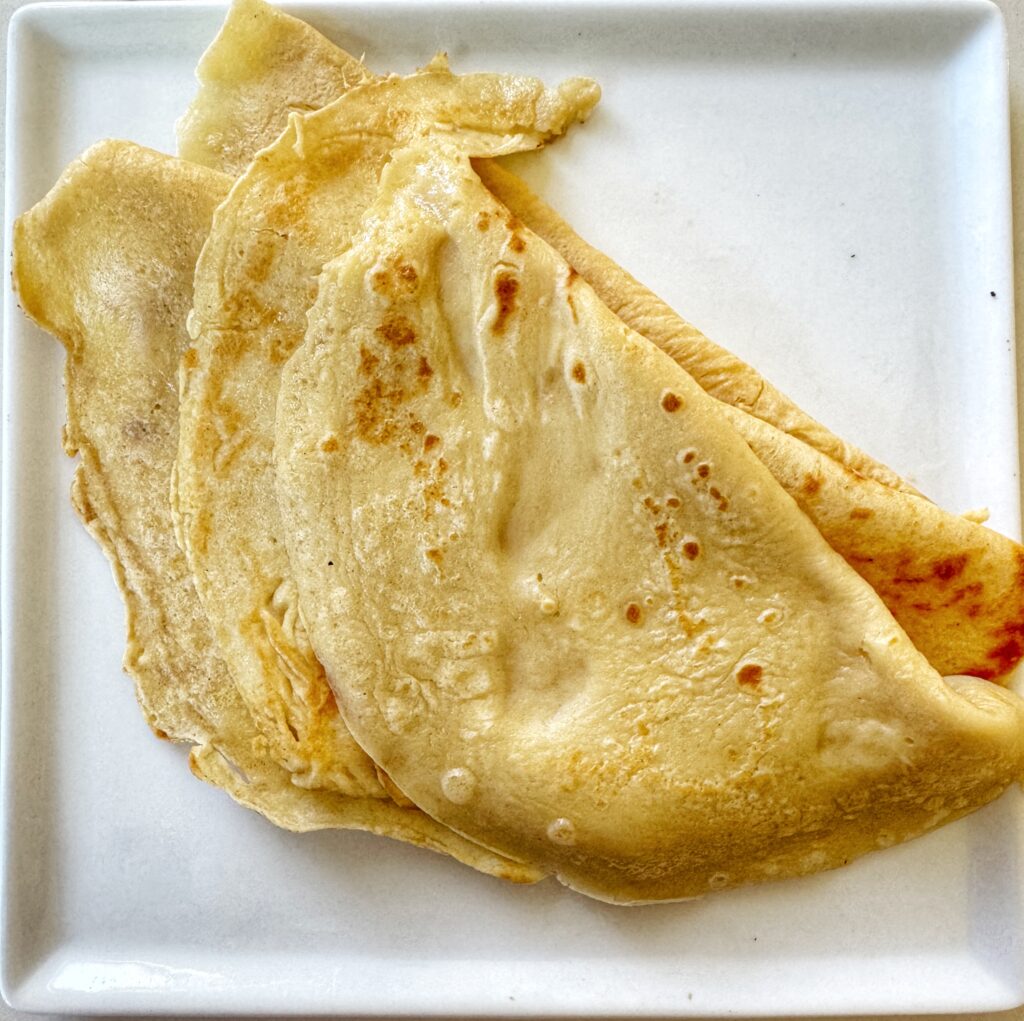
There are three pancakes left and those will be covered and stored in the refrigerator. These reheat really well in a microwave. Let’s eat!
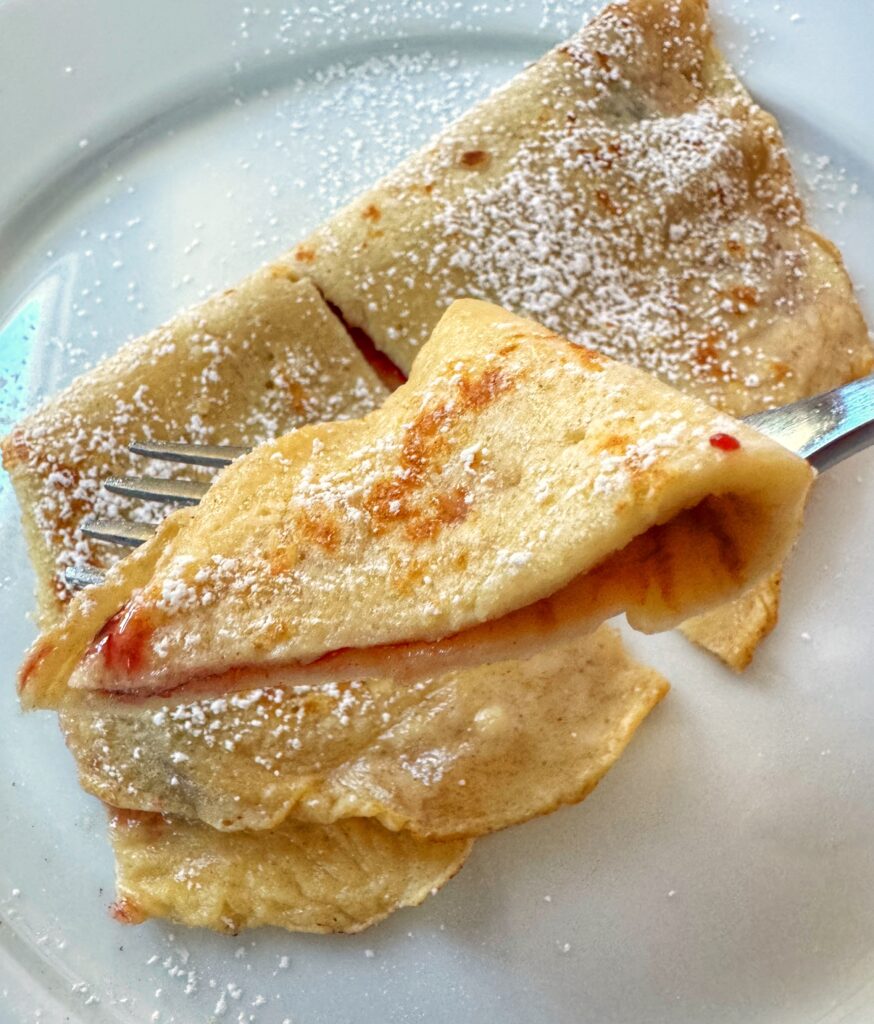
TASTING NOTES: This pancake is much thinner than how my mother made them. Maybe it’s my fondness for Swedish Pancakes that inspired me to make a thinner batter. They are just as delicious as a thicker pancake (just an an extra minute or two in the cooking time). German pancakes are comfort food that brings back childhood memories of living in Bavaria. We even ate these for dinner and never complained. I’m happy that my son remembers these as fondly as I do. My husband is a huge fan of them as well. So simple, yet so delicious and versatile. I hope you try them.
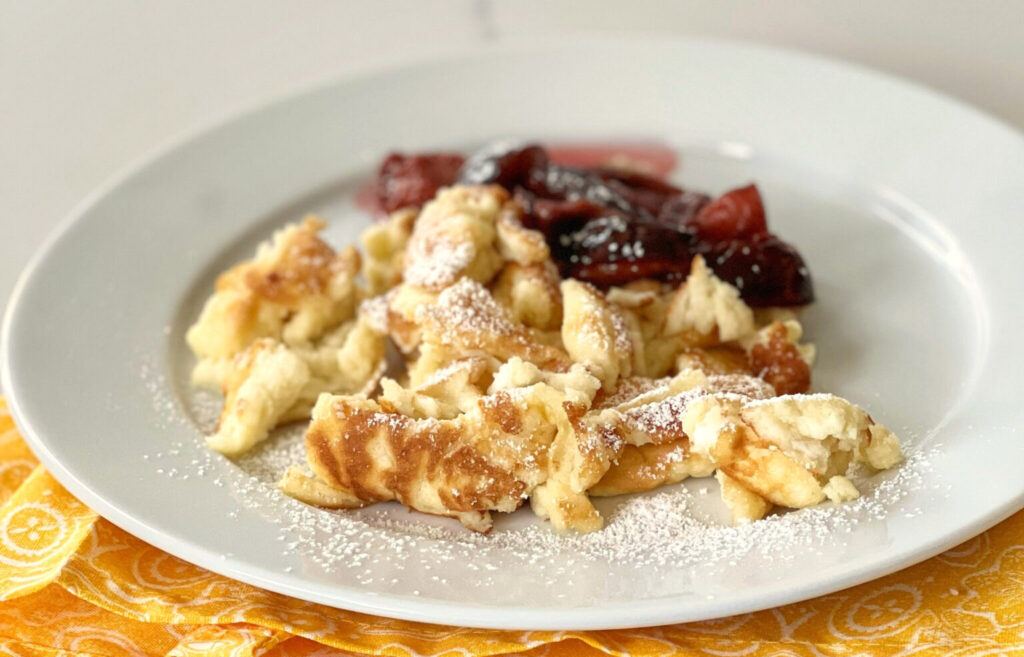
Another similar German recipe is Kaiserschmarrn. My mother also made this for us as a variation of German pancakes.
Authentic German Pancake Recipe
Equipment
- pastry brush optional to brush pan with melted butter
Ingredients
- 2 cups flour recommended: Unbleached All-Purpose Flour, such as King Arthur Flour
- 2 eggs
- 2 cups whole milk see notes for thicker pancakes
- 2 tsp pure vanilla extract
- 1 pinch salt
- 3 tablespoons butter melted
Garnish/Filling options:
- 1 tablespoons jam raspberry, strawberry, apricot or any flavor that you like -OR-
- 1 tablespoons lemon curd recipe linked in the notes
My favorite way to eat German Pancakes
- generous squeeze fresh lemon juice and 2tsp. butter
Instructions
- Preheat the oven to WARM (190℉-200℉) I like to preheat the plates and to keep the pancakes warm until they are served.
Make the batter:
- In a large bowl, measure the flour, eggs, salt and milk. Whisk until smooth and the majority of lumps are smoothed out. Add the vanilla and stir to combine.
- Likewise, the batter can also be mixed in a blender.
- Allow the batter to "rest" for 15-30 minutes. The batter usually thickens. (see notes about amount of milk to use).
Make the pancakes:
- Heat a non-stick skillet on medium heat. Brush the melted butter evenly on the skillet.
- Add about 1/2 cup batter into the prepared skillet. Immediately pick up the pan and tilt it until the batter is evenly spread on the bottom of the skillet. Allow the pancake to cook for 1-3 minutes. Lift a corner of the pancake with a spatula. If it's pale in color, cook for an additional minute. If the pancake has a golden color around the edges, and in part of the middle, flip the pancake.Continue cooking for another 2-3 minutes.
- Remove the pancake and stack them on the heated plate in the oven.
Serve the pancake:
- There are a few options on how to serve:1. Spread about 1 Tablespoon of jam (strawberry, apricot or raspberry are favorites) on half of the pancake. Fold the pancake in half (like an omelet). Dust with powdered or granulated sugar.2. Fold the pancake in thirds, and spread softened butter on top. Add a generous squeeze of fresh lemon juice. (My favorite.) Dust with powdered sugar.3. Fill half of a pancake with about 1 tablespoon Lemon Curd and evenly spread. Fold the pancake in half. Dust with powdered sugar.
- Any leftover pancakes can be stored, covered, in the refrigerator. These reheat well in the microwave.
Notes
Nutrition

I was pleasantly surprised to read your recipe for German pancake. This is the same recipe that has been passed down through the generations in my family. The pancakes were a special treat and wonderful. We enjoyed them (and still do) with maple syrup or lemon curd.
Thank you for taking the time to leave a review. I also share great memories of my Oma and Mutti making these. Now, my son likes making them too! I love the Lemon Curd idea.